Elevate Living: From Firefighting to Legacy-Building
Operations, Business Legacy, Systems
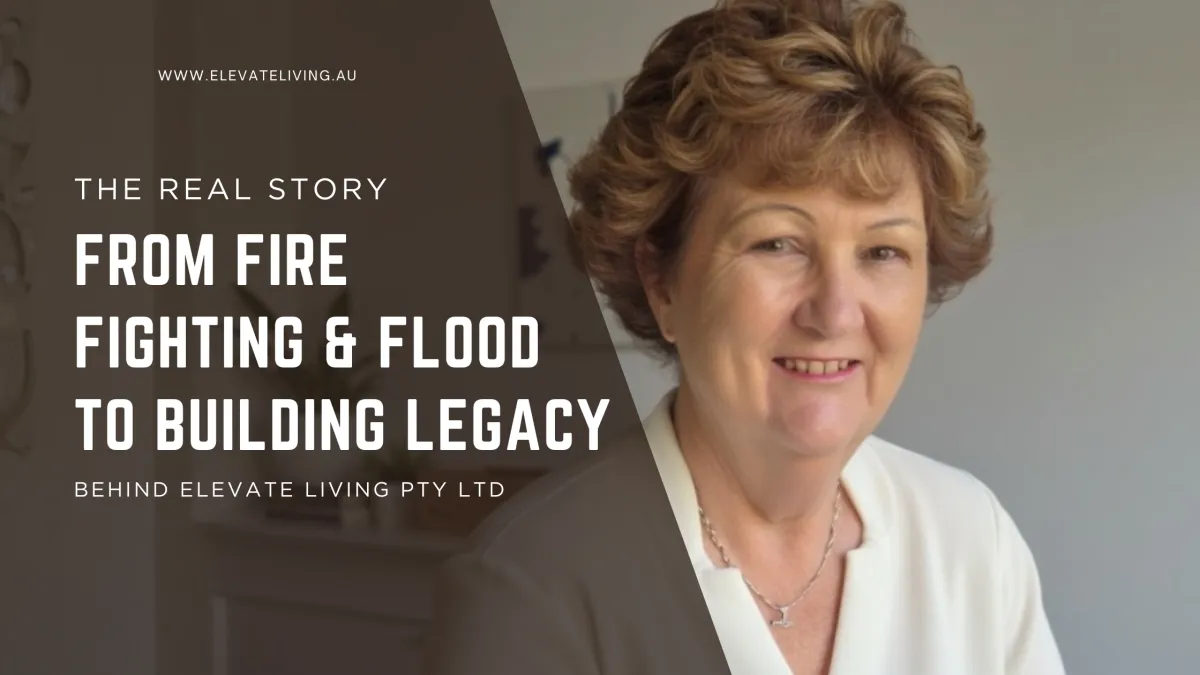
The Real Story Behind Elevate Living: From Firefighting to Legacy-Building
This is the story behind Elevate Living Pty Ltd - why it exists, what drives this work, and why I believe every ambitious business deserves a back end as strong as the vision at the front of it.

The Moment I Realised “Working Harder” Wasn’t the Answer
Elevate Living didn’t start as a clever business idea. It started as a pattern I couldn’t ignore anymore. Smart, driven owners were exhausted. They had great products, loyal clients, and a big vision, yet behind the scenes everything felt fragile. The business only worked if they did.
I kept meeting founders who were always on: emails at midnight, calls during family dinners, “just one more thing” on weekends. Their teams relied on them for every decision. Their revenue depended on their personal energy. Their families quietly absorbed the cost—missed events, distracted conversations, holidays that never really switched off. On paper, the business looked successful. In reality, it was running them instead of the other way around.
Watching this play out again and again is what pushed me to build Elevate Living Pty Ltd. I wanted to create a professional, scalable way to step into the chaos, calm the noise, and build operations that actually support the life and legacy the owner is working so hard to create.
The Family Business That Taught Me What Legacy Really Means
Long before Elevate Living Pty Ltd existed, there was our family business, a well-loved, hard-earned operation that had been built over nearly 20 years. It wasn’t glamorous. It was the kind of business that grew one loyal customer at a time, one long day at a time, with family members pitching in, learning on the job, and doing whatever it took to keep things moving.
That business went through one devastating fire and two major floods. The fire took half the business with it, stock, equipment, records, memories. I still remember the smell of smoke in the air, the shock of seeing blackened walls where familiar workspaces had been, and the quiet, heavy silence of watching years of effort reduced to ash. There were no neat endings, no instant comebacks, just insurance calls, late-night calculations, and the question: “How do we start again?”
Then came the first flood, water waist high through the shop, seeping into every corner of the business. It was shocking and disruptive, but still felt like something we could recover from with enough effort, enough cleaning, enough grit. We rolled up our sleeves, salvaged what we could, and kept going.
And then, the 2011 Brisbane floods hit. This time, the water didn’t just creep in, it rose to the equivalent of two storeys high. When the water rose, it didn’t just flood a building - it flooded the dream. The entire city felt it, but for us, it was the moment we knew that this chapter of our business story was being tested in a way we’d never imagined.
In the aftermath, something remarkable happened: the Brisbane “mud army” showed up. Volunteers, strangers, neighbours, friends of friends, walked through thick mud, hauled out ruined stock, scrubbed walls, and helped us piece together what was left. It was exhausting, filthy work, but it was also deeply human. Out of that mud and mess, the business felt like it rose again, born from the flood, like a phoenix. We rebuilt, reopened, and kept going.
But even phoenix stories have limits. The catastrophic financial and emotional impact of the fire and floods eventually caught up with us. The business survived for another 12 months, held together by sheer determination and hard work, until the numbers finally stopped adding up. After almost two decades, we had to face the heartbreak of saying, “We can’t bring this back,” and the doors closed for the last time.
“Losing that business hurt, but it also revealed something powerful: legacy isn’t just what survives; it’s what we carry forward.”
The grief was real. This was a business that had paid school fees, put food on the table, created jobs, and woven itself into the rhythm of our family life. Walking away felt like failure. But in that ending, something else became crystal clear: we hadn’t just built a business, we had built experience, insight, and hard-won wisdom.
Looking back now, I can see that the fire and floods were brutal teachers. They showed us where we were strong, and where our foundations weren’t. They exposed the risk of having too much knowledge in people’s heads, too much dependency on “the way we’ve always done it,” and not enough documented systems, diversification, or succession planning.
📌 Key Takeaway: The business ended, but the legacy didn’t. The legacy lives on in the way we now build stronger foundations, teach others from our mistakes, and design businesses that can withstand more than just a good season. They can withstand storms.
The next businesses would be different. They would be stronger, more intentional, and built for succession. That’s the thread that runs directly into the work I do now through Elevate Living Pty Ltd. Every system I design, every workflow I map, every succession conversation I encourage is shaped by that lived experience of knowing what it costs when foundations aren’t strong enough, and what’s possible when they are.
The legacy lives on through experience and learning, no matter what. And for me, that legacy is now about helping other owners build businesses that don’t have to break before they become resilient.
Why This Work Matters to Me (And Why I Love It)
What I love most about online business management is that it sits at the intersection of strategy, people, and possibility. I get to walk into a business that feels like a tangle of tasks, bottlenecks, and “we’ve always done it this way,” and help turn it into something clear, calm, and scalable. There is nothing quite like watching an owner exhale when they realise, for the first time in years, “I don’t have to carry this alone.”
I love seeing teams light up when they’re finally given clarity, trust, and structure. When the right systems are in place, people stop tripping over each other. They know what success looks like. They can make decisions without waiting for permission. The owner can step back from the daily firefights and step into their real role again, vision, relationships, leadership, and growth.
Legacy, Family, and the Question: “What Happens If I’m Not Here?”
For many of the owners I work with, their business is more than income. It is a family asset. It has funded school fees, first homes, holidays, and quiet acts of generosity. It carries their name, their reputation, and years of sacrifice. And yet, when we talk honestly about succession planning, there is often a pause, a sigh, and a simple truth: “If I step away, I’m not sure what would happen.”
A business without systems is not a legacy - it’s a liability. Family legacy and succession planning are not just legal documents or shareholding structures. They are built day by day in the way the business runs. Can it operate without you? Can someone else step in and understand what to do? Could it be sold, passed on, or managed by a next generation without everything grinding to a halt?
When we strengthen operations, we are not just making things “more efficient.” We are protecting families, futures, and options. That’s the real heart of legacy planning, creating a business that can keep taking care of the people you love, even when you’re not in every meeting and every inbox.
The Hardest Part: Being Open to Change
Most owners don’t struggle with ideas. They struggle with letting go. Being open to change is often the hardest step, not because they don’t see the value, but because their current way of working is familiar, even if it’s painful. They know how to push through, step in, rescue the situation, and “just get it done.”
Change means trusting a system instead of your memory. It means allowing your team to make decisions and sometimes make mistakes. It means admitting that the way things are now, reactive, rushed, and reliant on you, is not sustainable. And that can feel confronting, especially when those habits are the same ones that got the business off the ground in the first place.
💡 Pro Tip: Being open to change doesn’t mean losing control. It means shifting from control through proximity to control through clear systems and empowered people.
The Trap of Founder-Dependency, Daily Firefights, and Burnout
Founder-dependency is subtle. It looks like “I’ll just approve that,” “Send it to me first,” or “It’s quicker if I do it.” Over time, every road leads back to you. Your team stops making independent decisions. Clients expect you personally. The business can’t move without your input. You become the single point of failure, and the single point of exhaustion.
That’s when the daily firefights begin. A missed deadline here, a confused handover there, a client who “didn’t know” something had changed. Your day fills with putting out fires instead of building the future. You leave the office, or shut your laptop at home, feeling wrung out and strangely unsatisfied. You were busy, but you didn’t move forward.
Left unchecked, this becomes a burnout cycle. You push through, promise yourself it’s “just a season,” and keep absorbing more. Growth stalls, not because there isn’t demand, but because the internal capacity of the business is maxed out. You can’t take on more without breaking something, or breaking yourself. This is the point where many owners quietly wonder if they’ve built a business or just a job with extra stress.
Turning Your Business into a Legacy Asset: Systems, People, and Time
At Elevate Living, I see every business as having the potential to become a legacy asset, something that holds value beyond your daily involvement. The path to that doesn’t start with more marketing or more hustle. It starts with foundations:
Systems: Documented, repeatable workflows that mean tasks don’t live in your head. From onboarding to delivery to follow-up, everyone knows what happens when, and in what order.
Team empowerment: Clear roles, decision-making guidelines, and the tools people need to do their best work. When your team is trusted and supported, they stop bouncing everything back to you and start owning outcomes.
Reclaimed time: As operations smooth out, you regain the one resource you can’t buy back: time. Time to think, to lead, to be with your family, and to design the next chapter of your business instead of surviving this one.
This is how you move from a personality-driven operation to a systems-driven asset. It’s the difference between “I have to be there” and “It runs, whether I’m there or not.”
Economic Resilience: Diversification and Multiple Revenue Streams
Once the foundations are stable, we can start building economic resilience. That often means diversifying your offer and creating multiple revenue streams, without overwhelming your capacity or your team. It’s not about doing “more of everything.” It’s about designing strategic, system-supported ways to earn.
For some clients, that looks like adding a retainer model alongside project-based work. For others, it’s introducing digital products, memberships, or licensing arrangements that draw on existing expertise without adding constant manual delivery. Because the back end is organised, these new streams can be layered in thoughtfully, with clear workflows and capacity planning, instead of simply piling more pressure onto an already stretched team.
Diversification, done well, means your business is not at the mercy of one client, one offer, or one channel. It becomes more resilient, valuable, and attractive, to buyers, to future leaders, and to your own family, who can see that this is something built to last.
You Didn’t Start Your Business to Become an Overworked Manager
This is the part I come back to often in conversations with owners: you didn’t start this to manage chaos. You started your business to create something meaningful, to serve clients well, to provide for your family, to enjoy more freedom, or to build something you could one day step back from with pride.
Somewhere along the way, the vision at the front of the business outgrew the foundations at the back. That’s not a failure; it’s a signal. It’s the point where you get to decide whether you keep pushing through as an overworked manager, or step into the role of architect of a self-sustaining asset.
Fixing Foundations: From Crisis Management to Smooth-Running Operations
When we fix foundations, everything changes. Client delivery becomes consistent. Team communication becomes clearer. You have visibility over what’s happening, without needing to be in every detail. Growth stops feeling like a risk and starts feeling like a choice. The business shifts from fragile to valuable, self-sustaining asset.
This is the core promise of Elevate Living Pty Ltd: to move you from crisis management to smooth-running operations by building the systems, structures, and support your vision deserves. It’s not just about working better today; it’s about ensuring your business can keep creating opportunity, income, and impact for years to come.
Ready to Build the Back End Your Vision Deserves?
If you recognise yourself in any of this, the late nights, the firefights, the feeling that growth is stalling because everything depends on you, know that it doesn’t have to stay that way. Your business can be both profitable and peaceful. It can support your family, your team, and your future without burning you out in the process.
Elevate Living exists to be your strategic partner in that shift, to help you build the systems, empower your team, reclaim your time, and turn your business into the legacy asset it was always meant to be.
Book a FREE Discovery Call today, and let’s start getting your operations running smoothly, so you can step out of the burnout cycle and back into the role you were meant to play.